Why Silver Tarnishes and What That Surface Tells You
Why silver tarnishes depends on its surroundings. Learn what the surface change means and how to choose care that suits the object without over-polishing it.
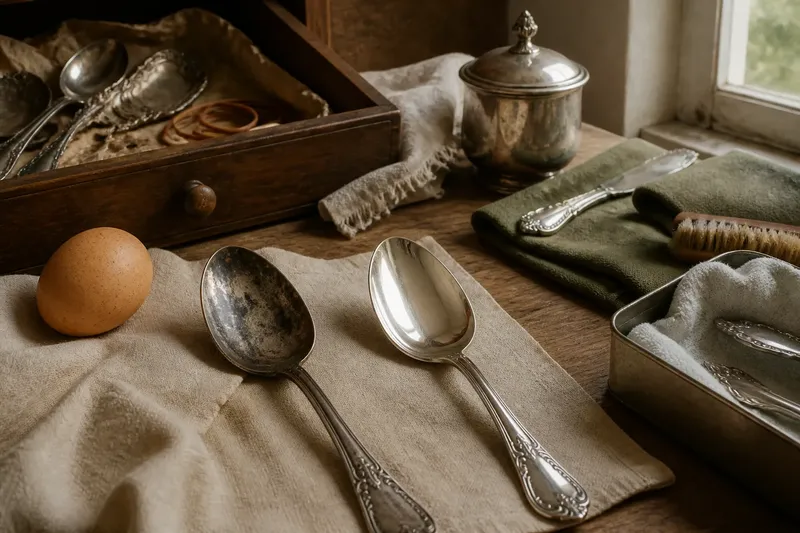
Why silver tarnishes becomes clear when a spoon left beside an egg darkens while one kept in a clean drawer stays bright. The change is a reaction at the exposed surface, not simply a layer of household dirt—and it cannot, by itself, reveal an object’s age or quality.
You can leave the surface alone, clean it carefully or ask a specialist to assess it. The sensible choice depends on the object’s construction, finish and purpose.
What causes silver tarnish?
Silver reacts with sulfur-containing compounds in its surroundings, forming silver sulfide at the surface. This reaction can make the metal look yellowish, brown, grey or nearly black. Tarnish is therefore a chemical change at the silver’s boundary with its environment, rather than a separate coating like paint on wood.
Sources of sulfur compounds include some foods, wool, rubber, certain papers and polluted air. Eggs can tarnish silver in direct contact with them. A drawer containing rubber bands or a cupboard lined with unsuitable paper may also expose stored silver to reactive substances.
Moisture and airborne pollutants can affect how quickly a surface changes. Skin oils, cosmetics and leftover food may contribute to uneven marks or keep residues against the metal. As a result, different parts of one object can darken at different rates.
Why does tarnish stay near the surface?
The reaction occurs where silver meets reactive substances, so tarnish appears at the exposed surface. It does not ordinarily mean that the entire object has changed in the same way. A surface reaction is more like a mark on the skin of an apple than a change throughout its flesh.
How much silver lies beneath that surface depends on the object’s construction. It may be solid silver or have a silver layer over another metal. Tarnish can form on either kind of surface, so a dark patch cannot identify the construction or show how much silver lies below it.
Recesses, engraved lines and textured areas may retain darker material, while raised parts receive more handling and rubbing. That contrast might be intentional, incidental or linked to earlier cleaning. It is not, on its own, a dependable record of how the object was made or used.
Should you leave tarnish, clean it or seek advice?
There is no single right response for every silver object. Gentle routine cleaning may suit a plain, regularly used utensil. A treasured piece with fine detail, an unusual finish or uncertain construction calls for more restraint. First consider whether the dark surface is unwanted tarnish, a deliberate finish or part of the object’s character.
- Check the finish and details: If the dark areas sit in delicate engraving or seem intentional, leave them in place; if you cannot tell, avoid polishing and ask a conservator or experienced silversmith.
- Check the object’s condition: If it is robust everyday silver with no visible fragility, gentle cleaning may suit it; if you see flaking, pitting or an unexpected colour change, stop and seek professional advice instead.
- Check the surface material: If you know the item is suitable for a silver-care product, use one intended for that object and follow its label; if its construction or finish is uncertain, do not assume the product is safe and consult a specialist.
- Check whether cleaning is necessary: If the item’s appearance and use are acceptable, leave it alone and store it dry; if you want a brighter surface and it is suitable for cleaning, use a soft cloth rather than a rough scouring pad.
- Check how much detail you want to preserve: If crisp marks and dark recesses matter to the design, avoid rubbing those areas; if an even, brighter appearance matters more on a sturdy item, clean gently and stop if the finish appears to change unexpectedly.
- Check for residues before storage: If food or moisture remains, clean and dry the item appropriately before putting it away; if the surface has a fragile or mixed-material finish, get advice on safe preparation rather than using a general cleaner.
Cleaning removes some surface material along with tarnish. Repeated polishing can soften crisp detail over time, so a bright finish is not automatically better than a stable, darker one. Choose according to the object’s use and the surface you want to preserve.
What can tarnish tell you—and what can’t it?
Tarnish offers clues about the conditions a surface has encountered. Uneven darkening may reflect differences in contact, storage or handling. An older object that has been polished may show little tarnish, while a newer one exposed to reactive materials may darken.
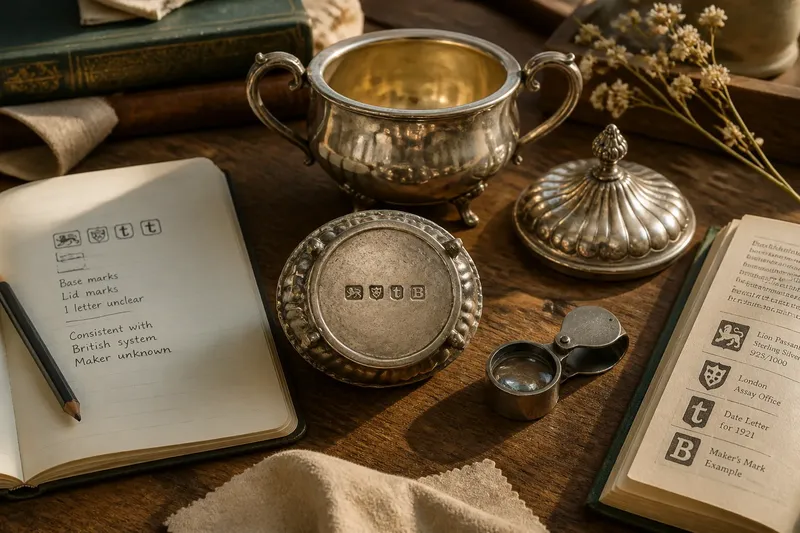
Tarnish is not a simple clock. It cannot reveal how long an object has existed, how often it was used or who owned it. A dark surface does not prove an object is solid silver, and a bright one does not prove it is not. Identification calls for evidence beyond colour, including suitable examination of the object and its construction.
Nor is tarnish a verdict on quality. Surface change can occur on silver of different compositions and forms. Its presence means the exposed material has reacted; it does not establish how carefully the object was made or how it was valued.
How should silver be stored to slow tarnish?
Remove food residue and make sure an item is dry before putting it away, provided its finish can be cleaned safely. Use a suitable tarnish-resistant cloth or a clean, dry container intended for silver. Avoid wrapping silver in wool, rubber or unknown paper, and keep it away from foods and household materials that may release sulfur compounds.
For pieces brought out only occasionally, storage choices can matter more than frequent polishing. Check the object from time to time, especially if it shares a cupboard with other materials. If tarnish returns, consider what has been stored beside it before reaching for a stronger treatment.
Which questions help you choose a response?
Does tarnish mean silver is fake?
No. Tarnish can form on silver, but colour alone cannot establish what an object is made from. Identification needs evidence beyond the surface appearance.
Can silver tarnish while it is being worn?
Yes. Contact with skin, cosmetics, clothing and the surrounding air can affect exposed surfaces, so a worn item may change unevenly. The pattern depends on its use and environment.
Is black tarnish more serious than yellow tarnish?
Not necessarily. Silver sulfide can look different as a surface reaction develops, and lighting or the object’s finish also affects what you see. Colour alone cannot diagnose damage.
Does polishing remove tarnish permanently?
Polishing can remove existing tarnish, but the surface may tarnish again if it encounters reactive surroundings. Cleaner storage can reduce exposure, though it cannot ensure a lasting shine.
How should you decide what to do with a particular piece?
Say you have a silver-coloured serving spoon with dark lines in its engraved handle. You want it clean enough for use, but you do not know whether the lines are tarnish or an intentional finish. First, inspect the handle in good light without rubbing it. Next, note the spoon’s silver-coloured surface and the uncertain construction; that appearance alone does not establish what lies beneath. Then avoid abrasive polishing and ask a conservator or silversmith to assess the finish. The resulting decision is to delay cleaning until you know whether the dark lines belong to the design, reducing the chance of changing a detail you meant to keep.
Why silver tarnishes is useful to understand because it separates a visible surface reaction from claims that colour cannot support. Treat tarnish as a clue about contact and care. Before choosing a cleaner, check the surface itself: an uncertain finish is a good reason to pause, not to polish harder.