A Silver Anniversary Table, Arranged Around One Heirloom
Plan a silver anniversary table around one heirloom, choosing a safe display, suitable role and personal details that help guests understand its place.
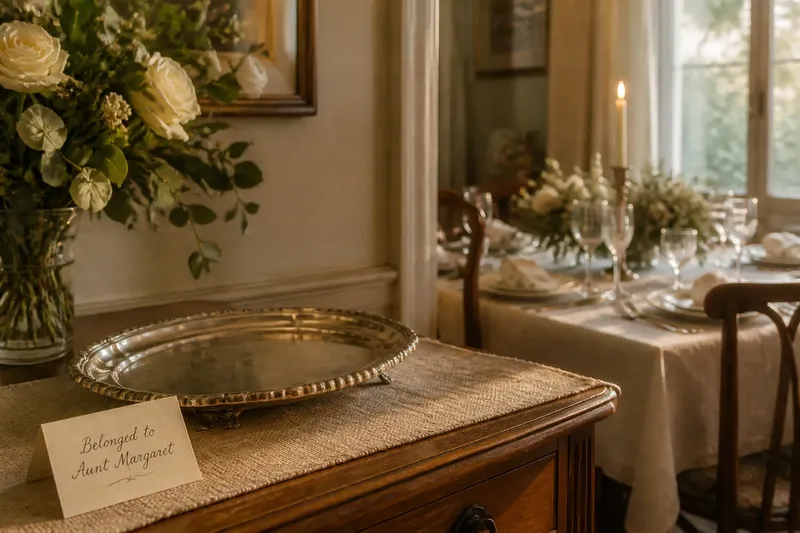
Where should a silver heirloom go on an anniversary table? Start with the object’s shape and condition, then decide whether it should serve a purpose or simply be seen. A small tray, for instance, may suit a sideboard better than a crowded dining table.
What role should the heirloom have?
Look at the piece before arranging anything around it. Is it stable? Does it have delicate handles, a loose joint or an uneven base? Is it meant to hold or serve something, or is its present condition better suited to display?
Choose one clear role:
- Serving piece: If the object is stable and suitable for contact with the intended contents, use it for a modest task, such as holding wrapped sweets. If its surface or suitability is uncertain, display it empty instead.
- Table detail: If it is small and stable, place it where guests can see it without obstructing plates or conversation. If it crowds the setting, move it to a sideboard.
- Quiet display: If it is delicate, unstable or unfamiliar in use, keep it away from food, drinks and busy serving hands. If the chosen spot is exposed to knocks, choose a quieter surface.
One well-placed object is enough. It does not need matching silverware or a larger arrangement to make its connection to the occasion legible.
Where will it be visible and safe?
Choose a firm, level surface away from the table edge. A centrepiece should leave guests able to see one another, while a piece used for serving should be reachable without being passed across the table. If neither arrangement works, use a sideboard or serving station.
Think of the heirloom like a lamp on a side table: its position should make its role clear without competing with everything nearby. A plain linen runner or small mat can mark its place. Keep flowers and candles far enough away that they cannot knock against it or expose it to heat.
Consider how the room will be used. If children will be moving around the table, or guests will be carrying hot dishes, a stable shelf or sideboard may be safer than the centre of the action.
Which arrangement suits the room?
Can a serving piece hold food?
Use it only if its condition and intended use make that appropriate. If you are unsure about a coating or surface, keep food separate and choose an empty display instead.
What if the piece is too delicate to handle?
Place it on a stable surface away from food, drinks and traffic. If guests may not recognise it, add a short, accurate note about its connection to the family.
What if the table is crowded?
Move the heirloom to a nearby sideboard, mantel or clear shelf. If the spot is difficult for seated guests to see, choose another position that does not interrupt the meal.
Does the table need matching silverware?
No. Use the tableware you already have and let linen, glass or flowers provide a quiet visual link. If those details make the setting feel busy, remove them and leave the heirloom with more space.
How can you prepare without overdoing it?
Dust the piece gently with a soft, clean cloth if needed. Do not polish simply to make it brighter: the finish may be part of its character, and an unfamiliar coating or fragile detail may call for specialist care. Follow maker’s instructions where available; if material or condition is uncertain, ask a conservator or reputable silver specialist.
Before guests arrive, check the arrangement and make a decision from what you observe:
- If the base rocks on the surface, move the object to a level spot; if it still rocks, display it somewhere it cannot be knocked.
- If the piece sits close to the table edge, move it inwards; if that blocks place settings, use a sideboard instead.
- If guests would need to reach across plates to see or use it, reposition it; if no clear place remains, keep it off the dining table.
- If the proposed contents might touch an uncertain surface, leave the piece empty; if its suitability is known and its condition sound, use only the intended contents.
- If a candle or flower arrangement could fall against it, separate them; if there is no safe spacing, remove the nearby decoration.
- If the family connection is known, write a brief note naming it; if it is uncertain, describe only what you can confirm or leave the card out.
Say you have a small inherited tray with an uneven rim, and dinner is planned around a compact table. You check it on the table and notice it takes space beside the plates, so you move it to a level sideboard. You leave it empty, place a card beside it saying it belonged to your aunt, and keep the dining surface clear. Guests can see the tray and understand its connection without needing to handle it.
What should you tell guests about it?
A short card can give the object context without turning dinner into a formal display. Name the previous owner if you know who it was, then add one detail you can stand behind. If the story is incomplete, say less rather than filling the gaps with an appealing but unsupported tradition.
The heirloom might be connected to a relative, a family meal or a tradition the couple has chosen to continue. Explain the connection that is actually known; the object does not need a long history to belong at the gathering.
For a silver anniversary table, decide first whether the piece should be handled at all. When its condition or use is uncertain, an empty, stable display and a few accurate words let it share the occasion without asking it to do more.